Tasmania Offers a Small but Premium Business Market

Tasmania Offers a Small but Premium Business Market
Tasmania continues to stand out as a small but highly distinctive business for sale market, combining limited supply with selective premium pricing, particularly in its capital city. While Tasmania represents a much smaller share of Australia’s total listings, its market characteristics differ sharply between metropolitan Hobart and regional centres.
Based on advertised prices from the Bsale Market Report (January 2026), Australia’s business-for-sale market currently comprises 16,033 active listings with a combined advertised value of $10.56 billion. The national average asking price sits at $658,623, providing a benchmark for comparing state and capital city performance.
Tasmania’s Position in the National Market
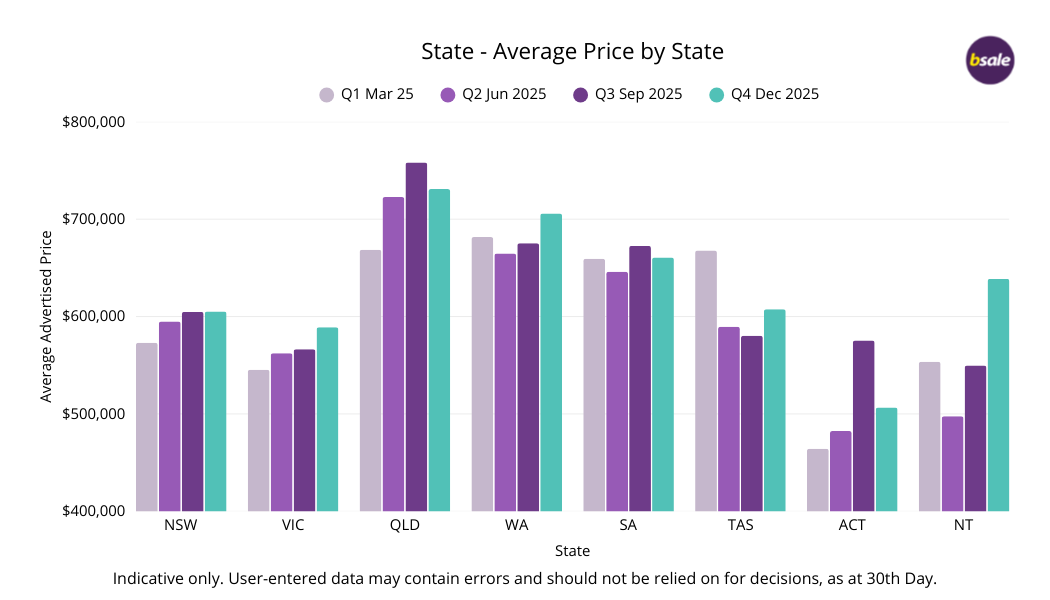
Tasmania currently has 361 active business listings, representing a combined advertised value of approximately $219 million. The average asking price across the state is $607,379, placing Tasmania just below the national average and positioning it mid-range nationally by price.
While Tasmania’s overall market size is modest, its pricing profile is shaped by tight supply, lifestyle-driven demand and a higher proportion of tourism and hospitality businesses, particularly in the south of the state.
Hobart Drives Premium Pricing
.png)
The Hobart region is the clear pricing leader within Tasmania, with 198 listings representing a combined advertised value of approximately $144 million. Hobart records an average asking price of $727,831, making it the highest-priced capital city market in Australia.
This elevated pricing reflects Hobart’s limited business supply, strong tourism demand and concentration of established hospitality, accommodation, food and lifestyle businesses. Many listings are tightly held and, in some cases, linked to valuable underlying property or long-term lease positions, supporting higher advertised prices.
Regional Tasmania Offers Lower Entry Points
In contrast, the Launceston & Northern Tasmania region provides a more accessible entry point, with 166 listings and an average asking price of $475,802. This places northern Tasmania among the more affordable regional markets nationally.
Businesses in this region are more likely to be owner-operated service, retail, trade and local hospitality businesses, supported by stable local demand rather than tourism volume. This pricing differential creates clear options for buyers depending on capital availability and growth objectives.
Market Size vs Market Pricing
Tasmania highlights the impact of supply constraints on pricing.
With fewer listings overall, particularly in Hobart, even modest buyer demand can push asking prices higher. Unlike larger mainland states where pricing is diluted by volume, Tasmania’s limited pipeline of businesses for sale contributes to higher averages in select locations.
At the same time, regional Tasmania offers pricing relief for buyers willing to trade scale and tourism exposure for consistency and lower acquisition costs.
Why Tasmania Continues to Attract Buyers
Tasmania’s appeal lies in its lifestyle positioning, constrained supply and strong tourism fundamentals, rather than market scale.
Interstate migration, lifestyle relocation and buyer interest in hospitality and accommodation businesses continue to underpin demand, particularly in Hobart. The state’s reputation for food, wine, tourism and natural assets supports long-term trading confidence in these sectors.
At the same time, Tasmania’s smaller economy and population base naturally limit large-scale business opportunities, contributing to a market that rewards long-term ownership and hands-on operation rather than rapid expansion.
What This Means for Buyers and Sellers
For buyers, Tasmania offers a choice between premium, tightly held metropolitan opportunities and more affordable regional entry points. Hobart appeals to buyers seeking exposure to tourism-driven demand, while northern Tasmania attracts those prioritising stability and lower upfront investment.
For sellers, Tasmania’s market rewards scarcity and strong presentation. Well-located, profitable businesses—particularly in Hobart—often attract sustained enquiry due to limited competition.
Based on advertised listing prices, Tasmania remains a small but influential business market, where value is driven by supply constraints, lifestyle demand and selective premium positioning.
It’s important to note that Bsale Market data is compiled from user-entered listing information and, due to the nature of business sales, should be used as a general guide only. Advertised prices and details may change or contain inaccuracies, and all figures should be independently verified through appropriate due diligence and professional advice.
As Australia’s business-for-sale landscape continues to evolve in 2026, Tasmania remains a distinctive market offering both premium and accessible opportunities, depending on location and business type.
Tags: tasmania tas hobart launceston market insights
About the author

Vanessa Lovie-Yousaf
CEO Bsale Australia
Vanessa Lovie-Yousaf is the CEO and manager of Bsale.com.au, one of Australia’s most trusted business for sale marketplaces since 2000. With 15 ...