 0
0
 1
1
 2
2








 Search Filters
2,532 Businesses For Sale in Melbourne Region VIC
Results 1-20 of 2,532
DANDENONG GATE CO - 35 years in business
Private Seller
Hallam, VIC
Price: $650,000 + SAV
- Established: 35 years in business
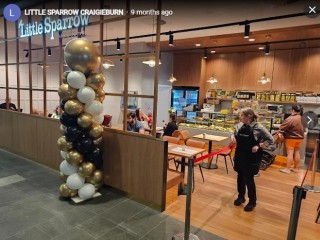
LITTLE SPARROW CAFE Craigieburn (with kitchen)
Private Seller
Craigieburn, VIC
Price: $399,000
- Established: Existing operating café
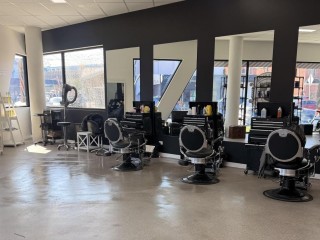
Barbershop
Private Seller
Parkdale, VIC
Price: $40,000
- Turnover: Not disclosed
- Net Profit: Not disclosed
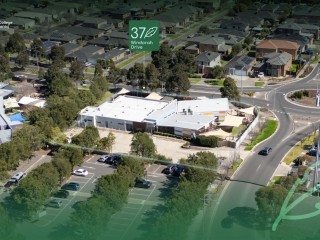
High Demand Point Cook Childcare Centre For Lease
Essentia Property
Point Cook, VIC
Price:
- Established: Established purpose built childcare facility

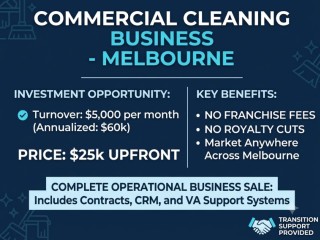
COMMERCIAL CLEANING BUSINESS FOR SALE - $5K/MONTH TURNOVER
Private Seller
Melbourne CBD, VIC
Price: $25,000
- Turnover: $5,000 per month ($60,000 per year annualised)
- Established: Established
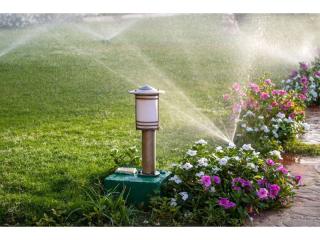
Established Irrigation & Water Solutions Business – Two Locations - $3M Annual Sales
Absolute Business Brokers
Moorabbin, VIC
Price: Price On Application
- Turnover: $Approximately $3 million in annual sales
- Established: Under current ownership for approximately 23 years
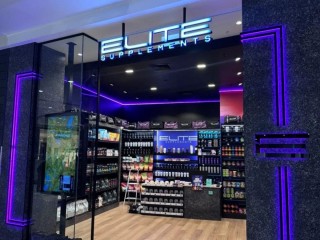
Elite Supplements Franchise for Sale - Australia-Wide | Full Shop Fit-Out | National Brand Marketing | Investment...
Johnston Business Sales
Braybrook, VIC
Price: 250,000 + GST
- Established: Founded in 2007
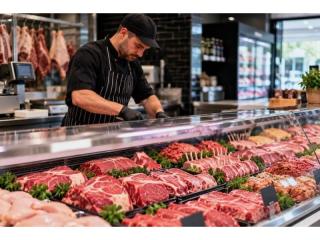
ESTABLISHED BUTCHER - $30,000 PW TAKINGS | PRIME SHOPPING CENTRE LOCATION
Absolute Business Brokers
Craigieburn, VIC
Price: Expressions of Interest
- Turnover: $Approximately $30,000 per week takings
- Established: Well-established
Fully Managed Automotive Workshop - Tarneit
SBA Real Estate and Business Brokers
Tarneit, VIC
Price: $130,000 + SAV
- Turnover: $Approximately $13,000 per week
Become a Motobility Franchisee in The Greater Melbourne Area
Johnston Business Sales
Melbourne CBD, VIC
Price: 500000
- Established: Over a decade of experience
Become a Motobility Franchisee in The Greater Melbourne Area
Johnston Business Sales
Melbourne CBD, VIC
Price: 500000
- Established: Over a decade of experience
LONG-ESTABLISHED HAIR SALON – WOODEND | UNDER MANAGEMENT | $13,500 PW
Absolute Business Brokers
Woodend, VIC
Price: Expressions of Interest
- Turnover: $Approximately $13,500 per week in takings
- Established: Long-established salon; long-standing presence in the local community
Architectural Aluminium Fabrication and Glazing Business – Melbourne
Xcllusive Business Sales Pty Ltd
Preston, VIC
Price: $900,000 + SAV
- Turnover: $FY2026 Revenue: $4.04M; FY2025 Revenue: $4.70M
- Net Profit: $FY2026 Adjusted Profit to Working Owner: $434,157; FY2025 Adjusted Profit to Working Owner: $672,656
- Established: Over 35 years
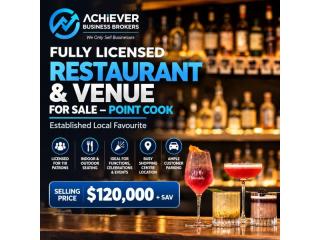
Fully Licensed Restaurant & Function Venue for Sale – Point Cook
Achiever Business Brokers
Point Cook, VIC
Price: $120,000 + SAV
- Turnover: Not disclosed
- Net Profit: Not disclosed
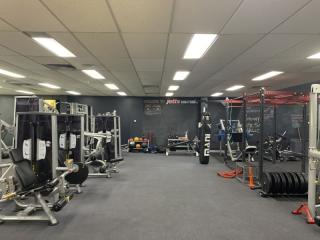
Fully Equipped 24/7 Jetts Gym Franchise – Hawthorn, VIC
Coast to Coast Business Sales
Hawthorn, VIC
Price: $95,000 WIWO
- Turnover: $310K
- Net Profit: $50K ROI
- Established: Trading since 2011; established 2015
Established Xero Bookkeeping Business – Remote Operation – EOI (Our Ref: V2115)
Paramount Business Brokers
Melbourne CBD, VIC
Price: Price on Application
- Turnover: $Approximately $258,000 for FY26
- Established: 13-year trading history
Well-Established Allied Health Business for Sale
Bespoke Business Brokers
Melbourne CBD, VIC
Price: $800,000
- Turnover: $Annual revenues circa $2 million
- Established: Well-established
Established Pizza Shop for Sale - Highett
SBA Real Estate and Business Brokers
Highett, VIC
Price: $138,000 + SAV
- Turnover: $Approximately $7,500 per week
- Established: Operating for 13 years
GROWING REFRIGERATED TRUCK AND VAN B2B RENTAL HIRE BUSINESS WITH MODERN FLEET
Bespoke Business Brokers
Melbourne CBD, VIC
Price: By Expressions of Intere...
- Turnover: $3.57m for FY2025 full-year revenue
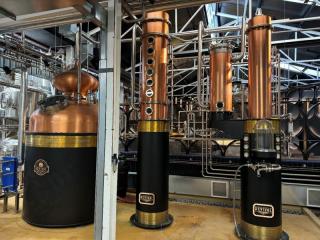
Premium Craft Spirits Brand & Production Assets – For Sale!
Bespoke Business Brokers
Melbourne CBD, VIC
Price: $500,000 plus Stock at...
- Turnover: Not disclosed
- Net Profit: Not disclosed
Market Overview
Based on Bsale Market data, the Melbourne region is one of Australia’s largest and most established capital city business markets, offering a broad mix of opportunities across multiple industries.
There are currently 3,215 businesses for sale in Melbourne, representing a combined advertised value of approximately $1.96 billion. The average asking price is $610,940, providing a clear benchmark for buyers assessing current market entry points across Victoria.
Melbourne’s average asking price sits below the Victorian state average ($589,072) and well below the national average ($658,623). This reflects the depth and diversity of the Melbourne market, where a high volume of owner-operated and service-based businesses sit alongside larger, well-established enterprises. While listings and prices fluctuate, Melbourne continues to be one of Australia’s largest business markets.
How Many Businesses are for Sale in Melbourne?
Based on current Bsale Market data, there are 3,119 active business listings across the Melbourne region.
This places Melbourne among the largest capital city business markets in Australia by volume, with listings spanning the CBD and inner-city precincts through to major suburban commercial hubs. Buyers benefit from access to a wide range of industries, business sizes and locations across metropolitan Melbourne.
What Is the Average Asking Price for Businesses in Melbourne?
The average asking price for businesses in the Melbourne region is $558,863, ranking Melbourne among the more affordable capital city markets by average value.
For comparison, the national average asking price currently sits at $658,623, while Melbourne’s average is higher than Sydney ($524,934) but well below higher-priced capital city markets such as Brisbane ($689,727) and Perth ($672,082). Melbourne’s pricing also sits just below the Victorian state average ($589,072), reflecting the scale of the market and the strong supply of hospitality, retail, trade, transport and professional service businesses offered at accessible entry points.
What Types of Businesses Are Selling in Melbourne?
Based on Bsale Market data, Melbourne offers one of Australia’s most diverse mixes of businesses for sale. Common listings include cafes, restaurants and takeaway food businesses, retail stores, professional and financial services, construction and trade services, transport and logistics operations, health and beauty businesses, and online or digital-first enterprises. This industry diversity supports strong buyer demand across different budgets, experience levels and investment strategies.
Where Buyers Are Looking in Melbourne
Buyer enquiry across the Melbourne region remains broad, with activity spread across both inner-city and suburban commercial areas.
Consistent interest is seen in Melbourne CBD and Southbank, along with inner-city precincts such as Richmond, Fitzroy and Brunswick. Western suburbs including Footscray, and south-eastern growth areas such as Dandenong and Clayton, continue to attract buyers seeking scale and more affordable entry points. Bayside locations including St Kilda also remain popular, particularly for hospitality, retail and service-based businesses. This geographic spread supports steady transaction activity across the metropolitan area.
How to Buy or Sell a Business in Melbourne
Since 2000, Bsale has helped Australians buy and sell businesses across Melbourne and every major city and regional centre nationwide. Buying or selling a business in Melbourne requires a clear understanding of pricing expectations, industry demand and buyer behaviour across different locations and sectors.
Buyers can compare live opportunities by industry, location and price range, while sellers improve outcomes by aligning their asking price with current market benchmarks and buyer demand. Businesses are commonly sold through licensed business brokers or marketed directly to buyers via the Bsale marketplace.
If you’re looking to buy, start with Bsale’s Buying a Business Guide to understand due diligence, valuations and finance. If you’re ready to sell, explore our Guide to Selling a Business, connect with a licensed business broker, or advertise your business directly on Bsale to reach qualified buyers.
> Register for alerts
> Sell a Business
> Guide to Selling a Business
> Guide to Buying a Business
Helpful Resources for Buying a Business in Melbourne
> What’s Selling Across Melbourne and Where Buyers Are Finding Opportunity
> Top 10 Business Brokers in Melbourne for Buying and Selling a Small Business
> The Best 5 Suburbs to Buy a Business in Melbourne
Popular Searches in Melbourne Region VIC
- Business For Sale in Dandenong
- Business For Sale in Richmond
- Business For Sale in Docklands
- Business For Sale in Moonee Ponds
- Business For Sale in Springvale
- Business For Sale in Wantirna South
- Business For Sale in Bacchus Marsh
- Business For Sale in Kew
Browse Categories in Melbourne Region VIC
- Restaurant For Sale in Melbourne Region VIC
- Franchise Business Opportunities For Sale in Melbourne Region VIC
- Cafe For Sale in Melbourne Region VIC
- Catering For Sale in Melbourne Region VIC
- Building and Construction For Sale in Melbourne Region VIC
- Alcohol Liquor Shop For Sale in Melbourne Region VIC
- Mobile Services For Sale in Melbourne Region VIC
- Takeaway For Sale in Melbourne Region VIC
Stay up to date with new listings
Frequently Asked Questions
How do I get new business alerts?
To never miss a new opportunity, click "Save" after your search or simply set up your "Buyer Alerts". Our system will email you matching new listings daily at 6 am, giving you a head start on the latest market opportunities.
How much money do I need to buy a business?
To secure a business loan in Australia, cash is king. Most lenders cap their Loan-to-Value Ratio (LVR) at 50–70%, meaning you typically need a 30% to 50% cash deposit upfront.
With the average asking price on Bsale currently sitting at $659,535 (Dec 2025), you should aim for a starting capital budget of $200,000 to $330,000 for a standard acquisition. However, the market is diverse with prices ranging from $20,000 micro-businesses to multi-million dollar enterprises, so it will depend heavily on the business you're buying.
Don't forget to budget for the "hidden" closing costs beyond the purchase price, which require immediate liquid cash. You will typically need to set aside between $1,500 and $8,000 for legal fees depending on complexity, plus funds for due diligence expenses like accountant reviews, government duties, and lease transfer costs. Crucially, you should also retain a working capital buffer large enough to cover wages, rent, the lease bond, and stock for your first 90 days of trade.
Is the price fair? Most small businesses are valued using a "multiple of profit" typically 1.5x to 4x annual net profit. For example, If a business nets $150,000 a year, a fair market price is likely between $225,000 and $600,000. Once you conduct due diligence it will help you to establish what is a fair price for the business.
What should I check before buying a business?
You must conduct thorough due diligence across three key pillars:
- Financials: Verify 3 years of Profit & Loss (P&L) and BAS statements.
- Legal: Review the commercial lease terms and required licenses.
- Operations: Check staff contracts and the condition of equipment.
Always have a qualified accountant verify that the owner's "Discretionary Earnings" (SDE) actually match the bank statements. Poor due diligence is the #1 cause of post-sale failure, so never skip this verification.
How long does it take to buy a business?
On average, most small business purchases take 6 to 14 weeks from the initial enquiry to final settlement, though complex acquisitions involving government licenses or commercial finance can extend beyond six months.
The process typically unfolds in four consecutive stages. It begins with Enquiry & Initial Review (1–3 weeks), where you sign an NDA and assess the Information Memorandum. This moves into Due Diligence (2–4 weeks), a critical period for your accountant and solicitor to investigate tax returns and lease agreements. Once satisfied, you enter Offer & Negotiation (1–2 weeks) to agree on price and terms, before concluding with Finance & Legal Finalisation (2–5 weeks) to secure bank approval and transfer the lease.
How do I sell a business?
To achieve the highest price, ensure your financials are "bank-ready" and your operations are fully documented. You can choose to list directly on Bsale to reach our database of qualified buyers or engage a licensed business broker to manage the valuation and negotiation process for you.
> Sell a Business
> Guide to Selling a Business
> Read Testimonials
Why is Melbourne a good place to buy a business right now?
Melbourne is currently offering a unique buying window for investors, driven by a post-correction market recovery and massive infrastructure milestones. With the city’s population on track to become Australia’s largest by 2035, the fundamental demand for services is rapidly outpacing supply.
The market is highly active, currently boasting 3,119 listings with a combined total value of over $1.76 billion. This volume gives buyers more choice than almost anywhere else in the country, while the average asking price of $558,863 remains significantly more affordable than the national average.
Financially, this presents a compelling value proposition. The lower entry point, combined with the recent opening of the Metro Tunnel unlocking the Western Suburbs, provides owner-operators with better serviceability and higher potential yields than currently found in Sydney or Brisbane.
What types of businesses for sale in Melbourne are most popular?
Melbourne’s market is dominated by Hospitality and Food, with Cafes and Restaurants remaining the #1 most searched category due to the city’s world-renowned coffee culture. However, 2026 has seen a significant shift toward "Essential Services." We are currently seeing a surge in buyer demand for Construction and Trades and Logistics businesses in the growth corridors. Additionally, Health and Beauty businesses are trending strongly, offering buyers stable, recurring revenue streams in a post-pandemic economy
Which Melbourne suburbs are best for buying a business?
Buyer demand is currently highest in the Western Suburbs (Werribee, Sunshine) for trades and logistics, driven by affordable industrial rents. For hospitality and retail, the Melbourne CBD, Richmond, and Fitzroy remain the busiest precincts for foot traffic. Meanwhile, the Eastern Suburbs (Camberwell) are the preferred "blue-chip" locations for established professional services and health practices
Are there specific legal requirements to buy in Melbourne?
Yes. To protect your investment in Victoria, you must verify if these conditions apply. First, the Section 52 Statement is mandatory for any business sold under $450,000; if this financial disclosure isn't provided before signing, you may have the legal right to cancel the contract. Second, regarding Liquor Licenses, as of July 2025, you generally no longer need a separate council planning permit for transfers, but you must still secure approval from Liquor Control Victoria. Finally, always request a Property Enquiry from the local council for food businesses to reveal any outstanding health orders so you don't inherit the repair costs.
Important: These laws are complex, so always consult a qualified commercial solicitor before signing any contracts.
For operational assistance, new owners can access resources through the City of Melbourne and Business Victoria, including the Business Acceleration Fund, which helps streamline regulatory approvals and digital upgrades. Additionally, the Victorian Small Business Commission (VSBC) provides free mediation services for retail lease disputes, a vital resource for navigating commercial tenancies in Melbourne’s competitive rental market.