What to Look for When Buying (or Selling) a Caravan Park

What to Look for When Buying a Caravan Park
Caravan parks remain a classic part of the Australian way of life but they are also one of the most attractive lifestyle and investment businesses in today’s market.
Domestic travel continues to underpin the sector. In the year ending December 2024, Australians took 15.2 million caravan and camping trips, generating $14 billion in spend remaining well above pre-COVID levels. Commercial caravan parks and camping grounds accounted for the majority of activity, including 56% of trips, 62% of nights, and 70% of total spend.
This demand is deeply tied to Australia’s favourable climate, strong regional tourism network, and a long-standing culture of road travel. Caravan and campervan registrations have also reached record highs, with more than 900,000 registered nationally a 27% increase since 2019.
For buyers, this creates a compelling proposition. Caravan parks are not just accommodation businesses they are diversified income assets supported by strong domestic tourism and repeat customer demand. There are currently more than 140 caravan parks for sale across Australia, offering a wide range of opportunities, from entry-level leaseholds through to large-scale freehold and passive investment assets.
At the same time, there are different ways to enter the market. Buyers can acquire leasehold, freehold, or franchised caravan parks, each offering a different balance of capital investment, control, and long-term security. Understanding these structures is the starting point for any serious buyer.
For sellers, the continued strength of regional tourism means well-positioned caravan parks with strong fundamentals continue to attract consistent buyer interest. But like any asset-backed business, value is driven by more than location alone.
Understanding What You’re Really Buying
Buying a caravan park is very different to buying a cafe or retail business. It is a hybrid asset it can be part property, part accommodation business, part operational enterprise.
The first decision is whether you are buying the land or simply the business.
A freehold purchase includes both the land and the business, offering long-term security and the potential for capital growth as property values increase. It also provides full control over future development, pricing, and operations. This is why freehold parks tend to command higher prices and attract a broader range of investors.
A leasehold purchase, on the other hand, gives you control of the business without owning the land. This lowers the upfront cost and can deliver strong returns, but it comes with lease terms, rent reviews, and less long-term certainty. The strength of the lease including its duration and conditions becomes a key part of the value.
Neither structure is inherently better. The right choice depends on the buyer’s capital, risk appetite, and long-term goals.
What Drives Performance in a Caravan Park
At a surface level, caravan parks appear simple sites, cabins, and travellers passing through. In reality, the strength of a park lies in how well it balances revenue, operations, and demand.
A well-performing caravan park will typically have multiple income streams. Accommodation through cabins, powered and unpowered sites, and long-term residents provides a base level of income, while additional services such as laundry facilities, retail offerings, or even fuel can further strengthen revenue.
This diversification becomes particularly important when considering seasonality. While holiday periods and peak travel seasons can drive strong returns, the best-performing parks are not reliant on these peaks alone. They maintain steady occupancy throughout the year, often supported by a mix of tourists, workers, and long-term guests.
Location plays a critical role in this balance. Parks positioned near major highways, tourist routes, or regional centres tend to benefit from both passing traffic and repeat visitation. Access to natural attractions such as beaches, national parks, or rivers adds another layer of demand, particularly for holidaymakers.
But location alone is not enough.
The condition of the park’s infrastructure from cabins and amenities to roads, drainage, and utilities has a direct impact on both occupancy and profitability. Caravan parks are asset-heavy businesses, and deferred maintenance can quickly turn into significant capital expenditure for a new owner.

Marketing, Systems and the Hidden Upside
One of the most overlooked aspects of caravan park performance is how the business is marketed and operated behind the scenes.
Occupancy is not just a function of location it is increasingly driven by online presence, booking systems, and pricing strategy. Parks with strong websites, positive reviews, and effective use of online travel platforms tend to outperform those relying on traditional or passive marketing.
In many cases, there is clear upside for buyers who can improve digital marketing, implement better booking systems, or adopt more dynamic pricing strategies. For the right operator, this can be one of the fastest ways to increase revenue without major capital investment.
Equally important are the systems that underpin the business.
Well-run caravan parks have structured processes for bookings, staffing, maintenance, and financial reporting. These systems not only improve efficiency but also make the business easier to transition and scale. Where operations rely heavily on the current owner’s knowledge, buyers should proceed with caution, as this can limit growth and create challenges post-settlement.
Common Mistakes Buyers Should Avoid
Despite their appeal, caravan parks are not passive businesses by default.
One of the most common mistakes buyers make is underestimating the workload. Many parks require hands-on involvement, particularly in owner-operated models, and operate seven days a week.
Another is focusing too heavily on peak-season performance. While strong holiday periods are attractive, they can mask weaker off-season performance. A clear understanding of year-round income is essential.
Buyers also often overlook future capital expenditure. Older parks may require upgrades to remain competitive, particularly in areas such as cabins, amenities, and guest facilities.
For leasehold purchases, failing to fully understand the lease terms can be a costly mistake. Rent increases, lease duration, and conditions all play a critical role in long-term value.
And perhaps most importantly, buyers can be drawn in by the lifestyle without fully assessing the business. A great location does not always translate into strong financial performance.
What Brokers Look for When Valuing a Caravan Park
From a broker’s perspective, caravan park valuations are built on a combination of financial performance, asset value, and future potential.
Sustainable profit is the starting point. Brokers look beyond a single strong year and focus on consistent, normalised earnings over time. Clear financial records and reliable income streams provide buyers with confidence.
The ownership structure also plays a significant role. Freehold parks typically attract higher valuations due to the inclusion of land and long-term security, while leasehold parks are more closely tied to profit multiples and the strength of the lease.
Revenue quality matters just as much as quantity. Parks with diversified income streams and stable demand tend to attract stronger interest than those heavily reliant on seasonal trade.
Operational strength is another key factor. Businesses with clear systems, manageable staffing, and efficient processes are more attractive and easier to transition.
Location continues to underpin value, but growth potential can be just as influential. Opportunities to add cabins, expand sites, improve marketing, or reposition the park can significantly increase buyer interest.
Ultimately, valuation comes down to a balance of risk and opportunity. The lower the perceived risk and the clearer the upside, the stronger the final sale price.
4 Caravan Parks Currently for Sale Across Australia
1. Dalby, QLD
Price: Leasehold $3,900,000
- 19 cabins: 3 studio, 4 one-bedroom, 12 two-bedroom
- 60 powered sites (6 ensuite) and 10 unpowered sites
- Three-bedroom managers residence with veranda
- Landscaped gardens, security fencing, shed and bitumen driveways
- Amenity block, two barbecue areas and onsite laundry
- Within two hours of Brisbane, close to major highways
- Turnover: $1,600,000 to $1,700,000
- Net Profit: $792,436
- Rent/Lease: 22 years lease
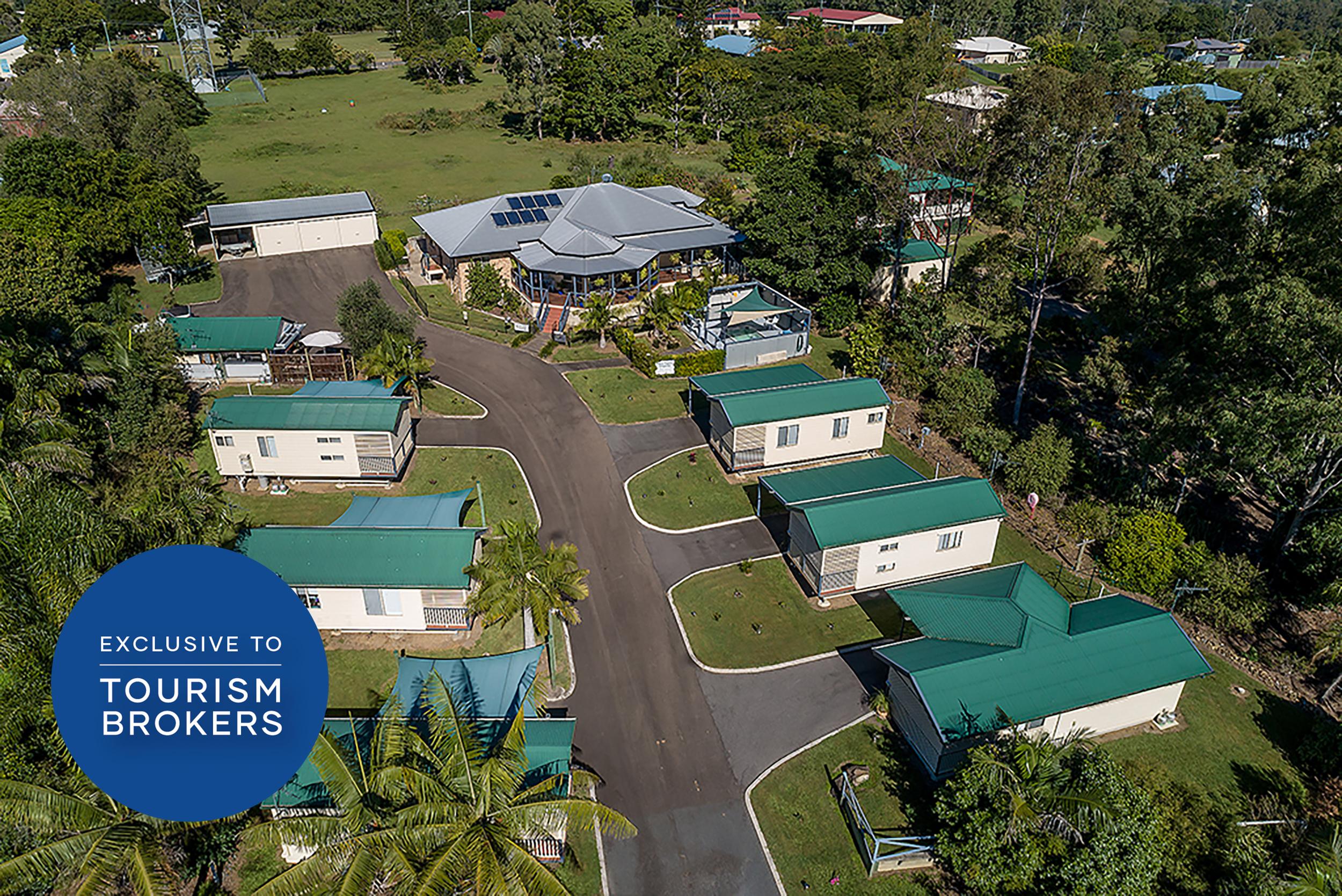
2. Tiaro, QLD
Price: Freehold $2,300,000
- Large open-plan four-bedroom home with verandas
- Six high-quality, fully refurbished cabins with undercover parking
- Impressive occupancy with healthy forward bookings
- Walkable 100–200 metres to town centre and services
- Pool, spa, laundry, barbeque and refurbished grounds
- Easily operated by a single person, family-friendly
- Turnover: Not disclosed
- Net Profit: $187,220
3. Nicola North, Victoria
Price: $1,900,000
- Freehold land holding (approx. 4 acres)
- Riverfront gateway to Alpine National Park and High Country tourism routes
- Multiple income streams: caravan sites, camping, retail, fuel services
- Existing site layout and established caravan park infrastructure
- Additional land and planning potential for expansion (STCA)
- Strong repositioning upside for glamping, hospitality, adventure tourism
4. Jackadgery, NSW
Price: Freehold $3,000,000
- 11 acres elevated, flood-free Mann River frontage
- 54 sites total: 48 short-term and 6 camp sites
- Accommodation mix including cabins, cottage, shack and studio
- Brand new 30-year lease with CPI-indexed increases
- Onsite retail: general store, bottle shop and fuel outlet
- Strong covenant pending tenant operating diversified tourism business
- Turnover: Not disclosed
- Net Profit: Not disclosed
- Rent/Lease: $225,000 commencing rental; CPI-indexed annual increases
The Bottom Line
Caravan parks continue to offer a rare combination of lifestyle, income, and long-term asset value.
Backed by strong domestic tourism and growing regional demand, they remain one of the most appealing business categories in Australia. Even with recent pressures — including fuel price concerns impacting short-term travel patterns such as softer Easter bookings the underlying demand for road travel and regional tourism remains strong. These fluctuations tend to be temporary, with the sector demonstrating resilience over time.
For those buying a business, the opportunity lies in understanding the detail from structure and location to revenue, systems, and operations.
For sellers, success comes down to preparation, presentation, and positioning.
Because while caravan parks may appear simple on the surface, the best outcomes are achieved by those who understand what truly drives value.
Tags: listicle buying small business 2025
About the author

Catherine Mangana
Customer Support
Catherine enjoys generating articles that highlight some of the opportunities that are now available for purchase on Bsale. She hails from a family of ...