Your Guide on How to Buy a Cafe in Australia

A Guide on How to Choose the Right Cafe for Sale
Cafes are the most popular type of business for sale in Australia, and it is easy to see why. They have a lower entry price than many businesses, they are easy to understand from the customer's side of the counter, and a good cafe becomes part of its community's daily routine.
That popularity also means plenty of choice. The cafes for sale on Bsale range from small coffee kiosks and walk-in, walk-out takeaway counters to established suburban cafes, franchised outlets and larger venues run under management. Choosing the right one means looking past the fit-out and the coffee to the lease, the figures and the people.
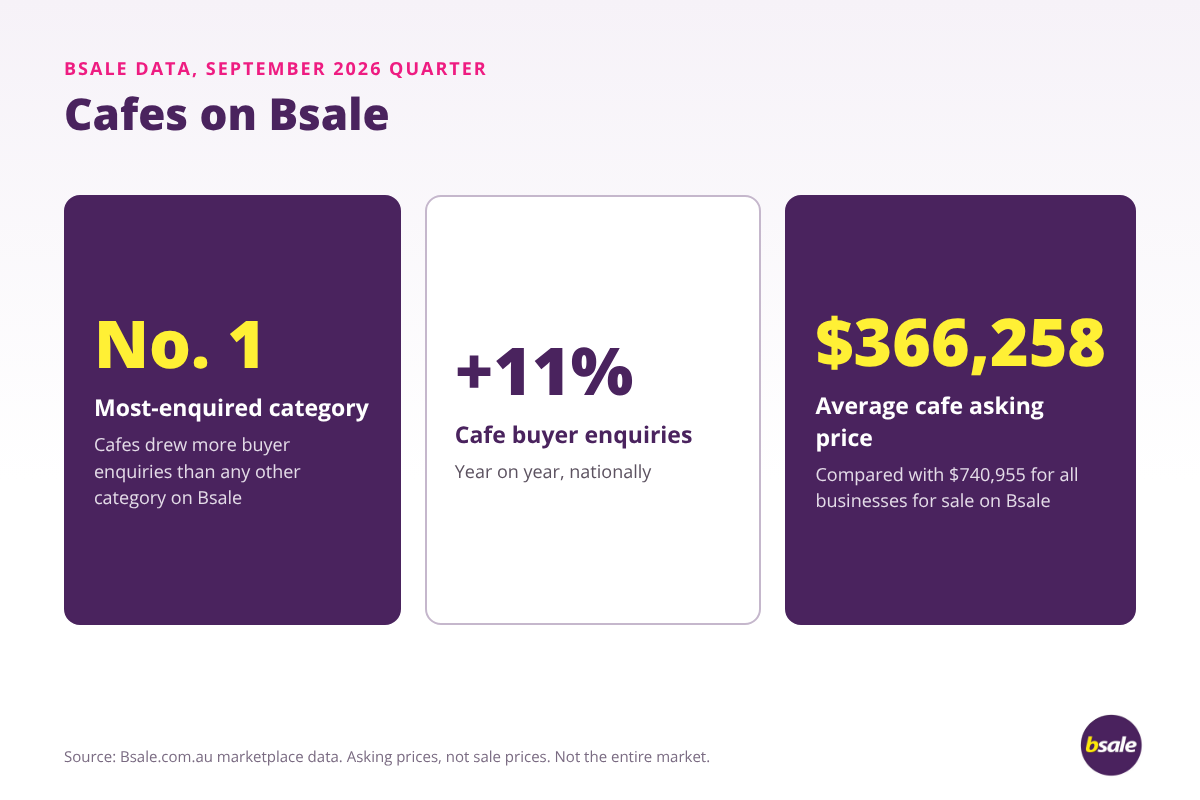
Buyer interest remains strong. Cafes were the most-enquired category on Bsale in the September 2026 quarter, with buyer enquiries up 11% year on year, according to Bsale's September 2026 quarter market report. The average advertised asking price for cafes was $366,258, compared with $740,955 across all businesses for sale on Bsale.
Trading conditions matter as much as demand. Rajiv Rajan, a business broker in Western Australia, has watched rising living costs change how customers spend. “You see people buying a regular-sized coffee instead of a large,” he said. “Or ordering one meal and sharing it.” That is why a cafe's recent figures, not just its reputation, should drive your decision.
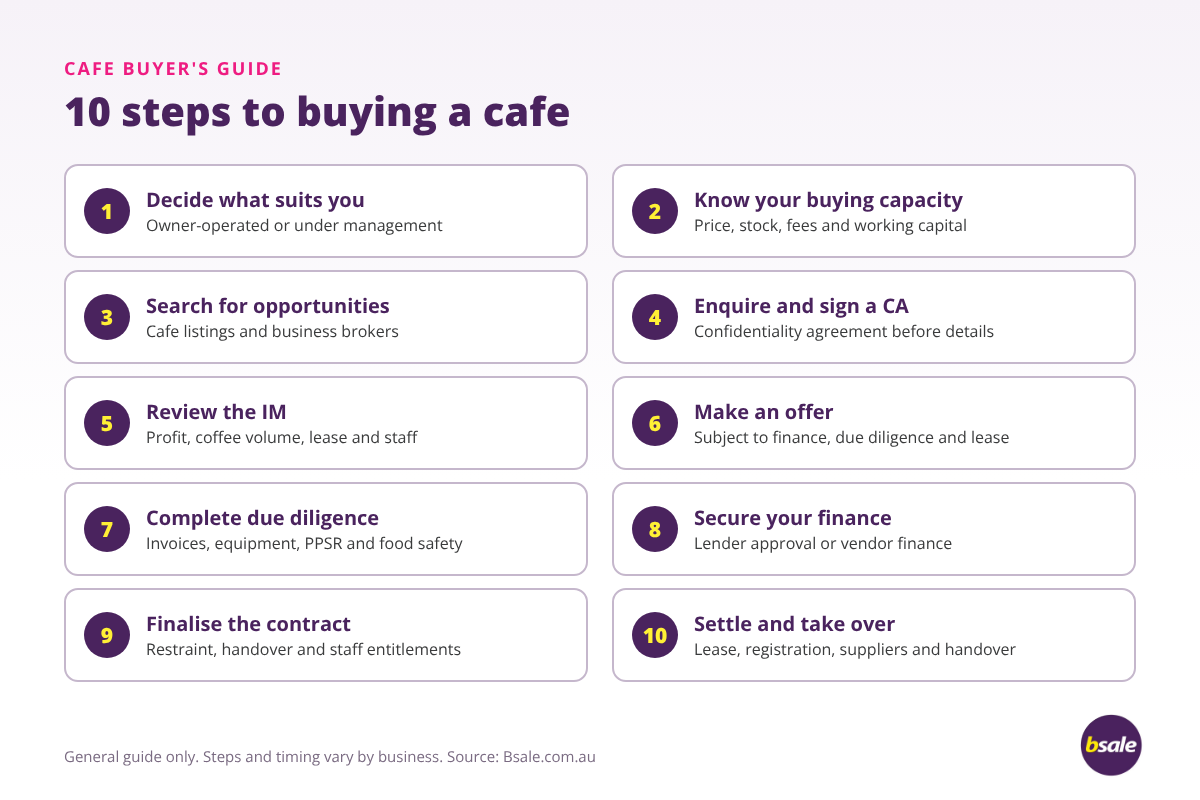
This guide follows the same 10 steps as Bsale's essential guide to buying a business, with what to know about buying a cafe at each stage.
1. Decide What Type of Cafe Suits You
Start by deciding how you want to be involved. Most cafes are owner-operated, with the owner working behind the counter or in the kitchen most days. Others are run under management, with staff handling daily trade while the owner oversees the business. If that appeals, Bsale's guide to buying a business under management covers what to look for.
Think about the style of cafe as well. A coffee-focused takeaway counter, a breakfast and lunch cafe, a destination cafe and a franchised outlet all trade differently, with different hours, staffing and margins. Choose a model that fits your skills, budget and the hours you are prepared to work.
2. Know Your Buying Capacity
Work out how much you can spend before you start enquiring. Cafes are often advertised either WIWO (walk in, walk out), which usually includes stock, or plus SAV, where stock at valuation is added at settlement. Beyond the purchase price, budget for:
- legal, accounting and due diligence costs
- stock at valuation if the price is quoted plus SAV
- a lease bond or bank guarantee
- any equipment repairs or upgrades needed soon after you take over
- working capital to cover wages, rent and supplies in the first few months
3. Search for Opportunities
Search cafes for sale on Bsale by location and price. For examples at a lower price point, see Bsale's roundup of cafes for sale under $300,000.
Talk to local business brokers as well. Many cafes are sold through brokers, and a broker who knows the area can tell you what cafes are selling, what buyers are paying attention to and which opportunities may be coming to market. Let them know what you are looking for and your budget, so they can contact you when something suitable comes up. You can find brokers near you through Bsale's business broker directory.
Before you shortlist a cafe, visit at different times of the day and week. Watch how busy it is, how quickly customers are served and how many coffees go out. Walk the area too. Count the competing cafes nearby and read their reviews as well as the cafe's own. A cafe that relies on passing trade can be badly affected by a new competitor, road works or a change in nearby businesses.
4. Enquire and Sign a Confidentiality Agreement
Most sellers and brokers will ask you to sign a confidentiality agreement before sharing the cafe's name, financials and other details. Ask questions early about why the cafe is being sold, how long the owner has run it and how many hours they work in the business each week.
Where a broker is handling the sale, they will usually manage enquiries, arrange inspections and pass on your questions to the seller. The broker is normally engaged and paid by the seller, so their role is to represent the seller's interests. A good broker will still be a useful source of information about the business and the sale process, but your own accountant and solicitor are the people who act for you.
5. Review the Information Memorandum
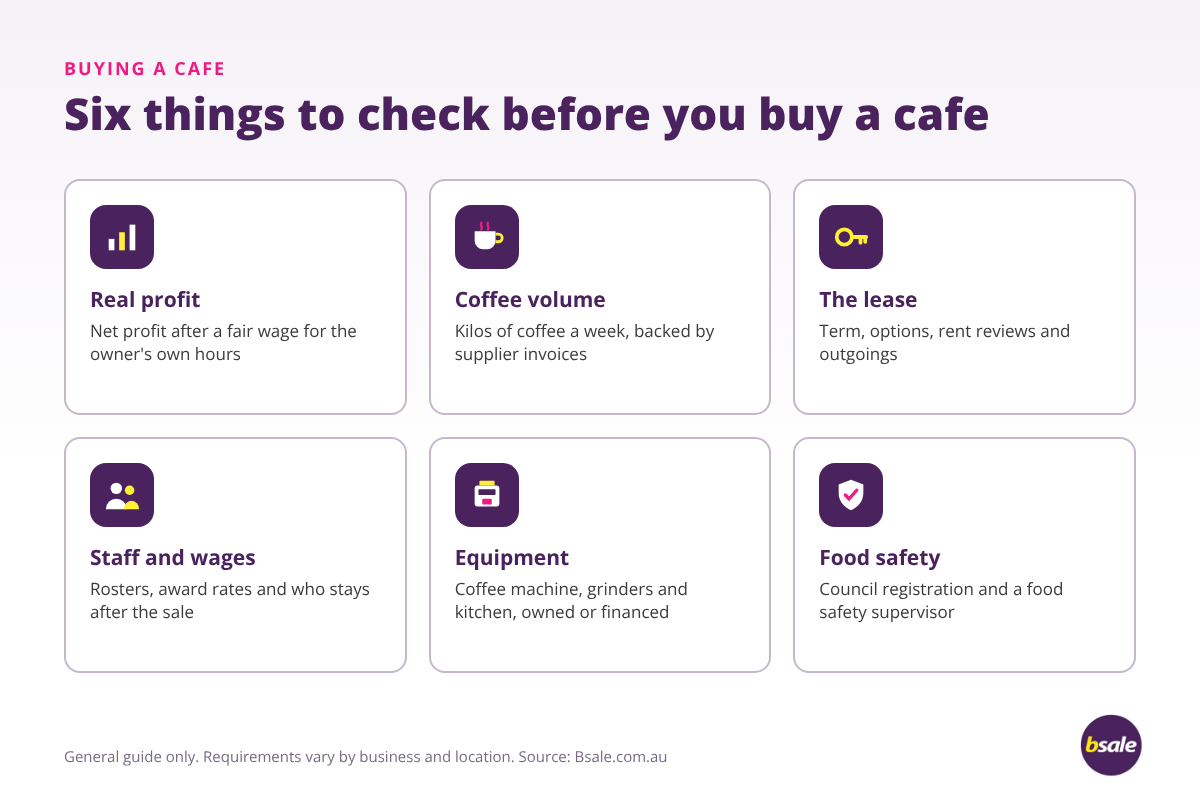
The information memorandum sets out how the cafe trades. For a cafe, look closely at:
- net profit, and whether it includes a fair wage for the hours the owner works
- how many kilograms of coffee the cafe uses each week, which gives a useful guide to trading volume
- the split between coffee, food and any other sales
- wages as a share of revenue, and how the cafe is staffed across the week
- the lease term, options and rent
- trading hours and any seasonal patterns
If the cafe is owner-operated, ask how the figures would change if you had to pay someone to do the owner's work. For a cafe under management, check that the management wages are already included in the figures.
6. Make an Offer
Once you are interested, make a written offer. Where a broker is involved, the offer usually goes through them, and they will present it to the seller and manage the negotiation. Make the offer conditional on finance, satisfactory due diligence and the landlord's consent to assign the lease. Bsale's article on the difference between a business appraisal and a business valuation explains how value is assessed.
7. Complete Due Diligence
Due diligence is where you check the figures and the business match what you have been told. Work through:
- profit and loss statements, tax returns and BAS, compared with point-of-sale reports and bank deposits
- coffee and food supplier invoices, to confirm the volumes the seller has quoted
- the lease, including term, options, rent reviews, outgoings and make good obligations
- supply agreements, particularly coffee contracts that may tie the business to one roaster or include equipment
- employment records, rosters, pay rates and staff entitlements
- council food business registration and any recent inspection reports
Equipment is a large part of what you are paying for. The coffee machine, grinders, fridges, ovens and kitchen equipment can be costly to replace, and some may be leased, financed or supplied under a coffee contract rather than owned outright. A search of the Personal Property Securities Register shows whether anyone has a security interest over equipment. The PPSR explains how in its guidance on buying second-hand machinery or equipment.
An experienced eye helps. Bowen Li, a business broker who trained as a chef and ran his own food businesses, said his background lets him assess a venue quickly. “Once I walk into the restaurant or cafe, I can tell straight away what sort of equipment you have and the value of that equipment,” he said. If you do not have that experience, consider having the major equipment inspected before you commit.
Food safety rules apply to every cafe. Under Food Standards Australia New Zealand's Standard 3.2.2A, cafes generally need a certified food safety supervisor and trained food handlers. Check with the local council how the food business registration will transfer to you. Bsale's guide to due diligence in a business sale explains the process in more detail, and the business.gov.au guide to buying an existing business also covers researching a business before you buy.
8. Secure Your Finance
Lenders will usually want to see a reliable trading history, the lease and details of the assets being purchased. Some sellers offer vendor finance, which can help bridge part of the purchase price. Bsale's article on vendor finance and buy-out options explains how these arrangements work.
9. Negotiate and Finalise the Contract
Your solicitor should review the sale contract before you sign or pay a deposit. Make sure it covers the equipment and stock included in the price, how stock will be valued, the seller's restraint of trade, the handover and training period, and how staff entitlements will be dealt with if employees transfer to you.
Cafe staff are usually covered by a modern award, such as the Hospitality Industry (General) Award or the Restaurant Industry Award, depending on the business. The Fair Work Ombudsman provides information on pay rates, penalty rates and employer obligations. Have a solicitor review the lease before you commit. Bsale's article on how a lease agreement can affect a business sale price explains why the lease matters. A cafe's regulars are often tied to its location, so moving is rarely a simple fix if the lease falls through.
10. Settle and Take Over
At settlement, the balance is paid, the lease is assigned and the cafe passes to you. Make sure the food business registration is in your name and that you have a food safety supervisor in place before you trade. Work through the handover with the seller, including introductions to staff, suppliers and regular customers. Keep the menu, coffee and service consistent in the early weeks while you get to know the business. Regulars notice changes quickly.
Check any licences or permits the cafe needs, such as outdoor dining approvals, using the Australian Business Licence and Information Service.
Ready to Start?
Start by deciding what kind of cafe suits you and how involved you want to be, then compare listings against those criteria. Visit your shortlisted cafes more than once, and get an accountant and solicitor involved before you sign anything.
Browse cafes for sale in Australia on Bsale
Disclaimer: This article provides general information only and does not constitute financial or legal advice. Listing information is supplied by advertisers and has not been independently verified by Bsale. Market figures reflect Bsale marketplace activity and do not represent the entire Australian business sales market. Asking prices are advertised prices, not confirmed sale prices, and listings marked as sold do not necessarily represent completed transactions. Buyers should conduct their own due diligence and obtain independent professional advice before purchasing a business.
Originally published: 1 September 2025
Updated: 23 November 2026
Tags: cafe hospitality guide
About the author
Vanessa Lovie-Yousaf
CEO Bsale Australia
Vanessa Lovie-Yousaf is the CEO and manager of Bsale.com.au, one of Australia’s most trusted business for sale marketplaces since 2000. With 15 ...


