How to Buy a Business in Tasmania

How to Buy a Business in Tasmania. Image: Hobart TAS
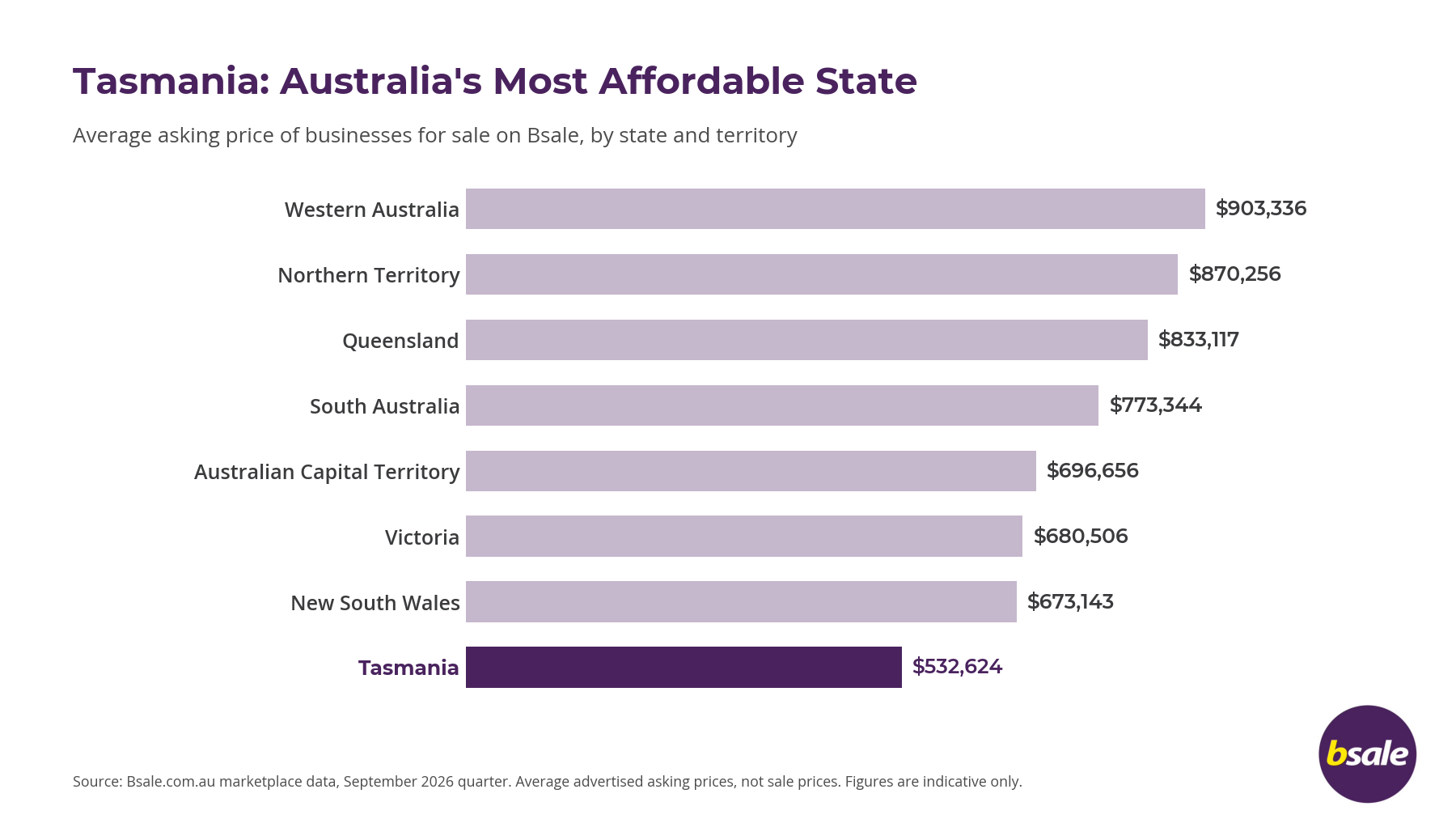
Tasmania recorded the lowest average asking price for businesses for sale on Bsale in the September 2026 quarter, making it an attractive market for buyers considering an established business.
From cafes and accommodation businesses in Hobart to tourism, hospitality and service businesses in Launceston and regional Tasmania, buyers can find opportunities across a range of industries and price points.
Buying an existing business can provide an established customer base, employees and trading history. However, Tasmania's smaller market, seasonal tourism activity and local licensing requirements create some important considerations.
This guide covers how to buy a business in Tasmania, including local market conditions, due diligence, stamp duty, retail leases, licences and buying a lifestyle or tourism business.
For an overview of the buying process, read Your Essential Guide to Buying a Business in Australia, or view businesses for sale in Tasmania.
Tasmania's Business for Sale Market
According to Bsale marketplace data for the September 2026 quarter, businesses for sale in Tasmania carried an average asking price of $532,624. That was the lowest of any state or territory, and well below the most expensive state, Western Australia ($903,336).
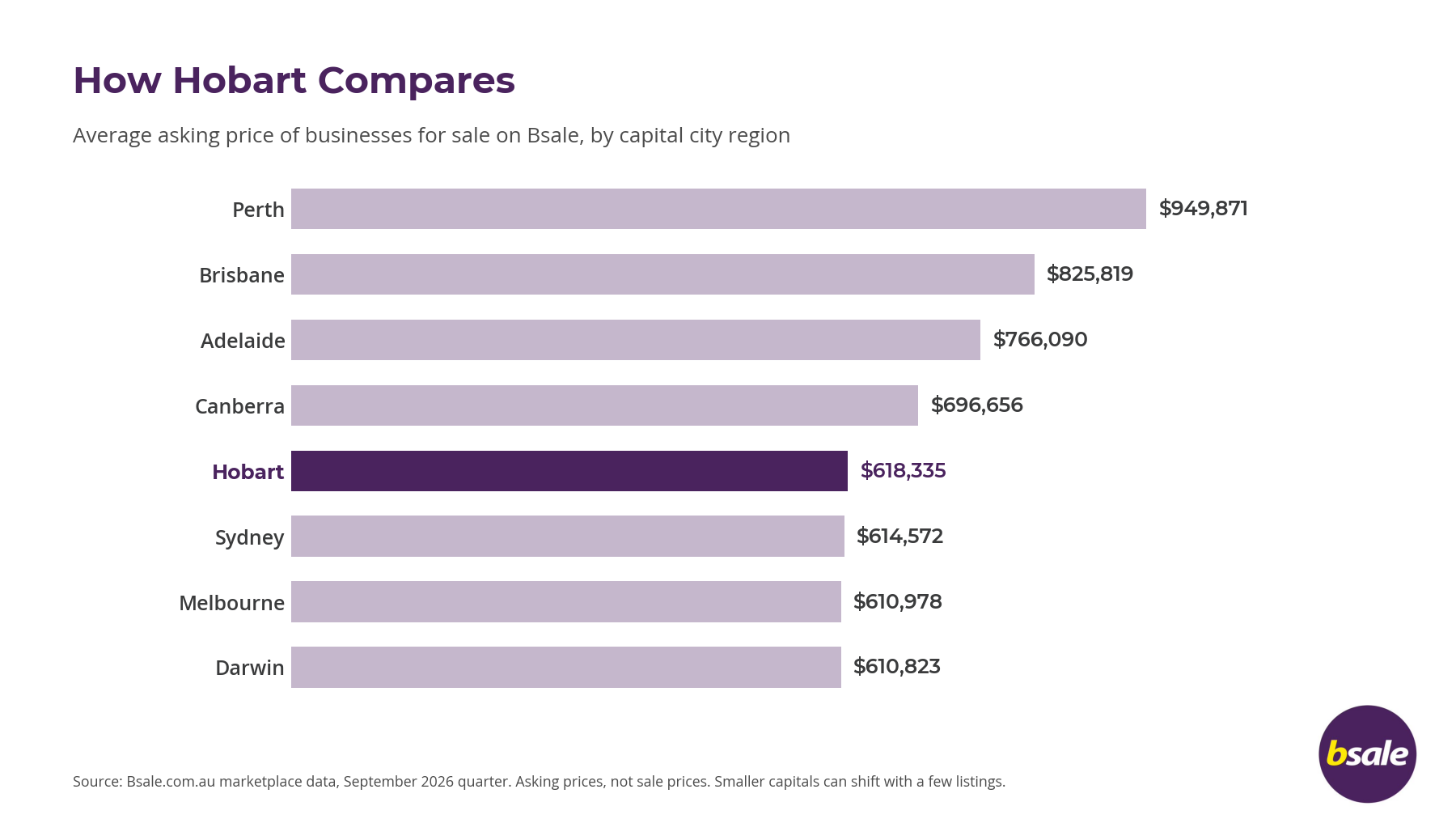
Hobart averaged $618,335 in the September quarter. As a smaller capital city market, its average can move noticeably with just a few higher-value listings, particularly in tourism, accommodation and freehold businesses.
Launceston & Northern Tasmania recorded one of the lowest regional averages in the country, alongside the Blue Mountains in NSW and Bunbury & South West WA. Lower entry prices can suit first-time buyers, owner-operators and lifestyle buyers.
Tasmania's market is much smaller than the mainland states, so there are fewer businesses to choose from at any one time and figures can shift from quarter to quarter. Eight businesses in Tasmania were marked as sold on Bsale in the September quarter, fewer than a year earlier, so treat short-term movements as indicative only.
For buyers, that means being patient, setting up alerts and acting promptly when the right business comes up. For more background, read Tasmania Offers a Small but Premium Business Market.
Bsale figures represent advertised asking prices and marketplace activity, not independently verified business values or completed sale prices.
How to Buy a Business in Tasmania
The buying process in Tasmania follows the same general steps as the rest of Australia, although state laws and local operating conditions can affect the purchase.

- Set your budget and criteria. Decide how much you can invest, which industry suits your experience and whether you want an owner-operated or under-management business.
- Arrange finance early. Speak with a bank or business finance broker about borrowing capacity, working capital and any seasonal cash flow requirements.
- Find suitable businesses. Search businesses for sale in Tasmania, register with local brokers and set up Bsale buyer alerts.
- Review business information. Request financial statements and an information memorandum. A confidentiality agreement may be required.
- Inspect the business. Review the premises, equipment, staffing and operations. For seasonal businesses, examine trading performance across the full year.
- Make an offer. Your solicitor can help structure an offer with appropriate conditions relating to finance, due diligence, leases and licences.
- Complete due diligence. Have your accountant and solicitor verify the business's financial, operational and legal position.
- Finalise the contract and settlement. Confirm the purchase price, included assets, employee arrangements, stock adjustments and handover requirements.
The Tasmanian Government provides a useful guide to buying an existing business, covering financial checks, valuations, contracts and post-purchase responsibilities.
Tasmanian Laws and Requirements When Buying a Business
Several Tasmanian regulations can affect the cost, timing and conditions of a purchase. Buyers should check which requirements apply to the business and industry.
Stamp Duty on Business Purchases
Tasmania abolished stamp duty on goodwill and other non-real business assets from 1 July 2008. However, duty may still apply when a business purchase involves land, commercial leases or certain goods transferred as part of a dutiable transaction.
For example, equipment transferred alongside a lease or freehold property may have different duty implications from equipment purchased separately.
The State Revenue Office explains how duty applies to business assets and when goods may form part of a dutiable transaction.
State Revenue Office Tasmania – Duty on Business Assets
Buyers can also check the current property transfer duty rates.
Have your solicitor confirm any duty before signing, particularly where the purchase includes business premises, a lease or substantial equipment.
Business Broker Licensing
Buyers dealing with property agents in Tasmania can check their licensing details through the Property Agents Board.
The Board maintains a public register of licensed property agents, including real estate agents and property representatives.
Property Agents Board – Register of Property Agents
Business sales agents may be subject to different requirements depending on the activities they undertake. Buyers should confirm the appropriate authorisations, especially where property forms part of the transaction.
The broker is generally engaged by the seller, so buyers should obtain independent advice from their accountant and solicitor.
Retail and Commercial Leases
For businesses operating from rented premises, the lease can significantly affect the value and viability of the purchase.
Tasmania's retail tenancy arrangements are governed by the Fair Trading (Code of Practice for Retail Tenancies) Regulations 1998, which continue to apply while most provisions of the Retail Leases Act 2022 remain uncommenced.
When buying a business, the existing lease may need to be assigned to the purchaser with the landlord's consent. Before committing, review the remaining lease term, renewal options, rent increases, outgoings, permitted use and make-good obligations.
The Tasmanian Government's retail tenancy guide explains retail leasing obligations, bonds, disputes and the current legislative arrangements.
For more information, read 6 Ways a Lease Agreement Can Impact Your Business Sale Price.
Business Licences and Registrations
Licences and registrations do not necessarily transfer automatically when a business changes ownership.
Requirements depend on the industry, business activities and location.
- Food businesses – Cafes, restaurants and other food businesses may need registration or notification through their local council. The Tasmanian Department of Health provides guidance on buying and operating a food business.
- Liquor licences – Pubs, bars, restaurants and bottle shops need approval from the Commissioner for Licensing before a liquor licence can be transferred. See Transferring Your Liquor Licence.
- Gaming venues – Businesses operating gaming machines or keno may require additional approvals through the Tasmanian Liquor and Gaming Branch.
- Tourism operators – Businesses conducting commercial activities in national parks or reserves may require a Nature Based Tourism Licence.
- Other regulated industries – Childcare, health, transport, security and trade businesses may require additional licences or accreditations.
Buyers should confirm approval requirements before signing a contract and allow sufficient time for applications or transfers.
Employee Entitlements and Workers Compensation
Buying a business with existing employees can involve ongoing employment obligations.
Under Tasmania's long service leave laws, previous service can continue to count when business ownership changes. This can leave the new employer responsible for entitlements accumulated before the purchase.
WorkSafe Tasmania – Long Service Leave
Tasmanian employers must generally obtain workers compensation insurance through a licensed insurer unless authorised to self-insure.
WorkSafe Tasmania – Workers Compensation Insurance
Payroll tax may also apply depending on wages and grouping arrangements. Business Tasmania advises that the general annual Australian wages threshold is $1.25 million.
Business Tasmania – Tax Obligations
What Should Buyers Check During Due Diligence?
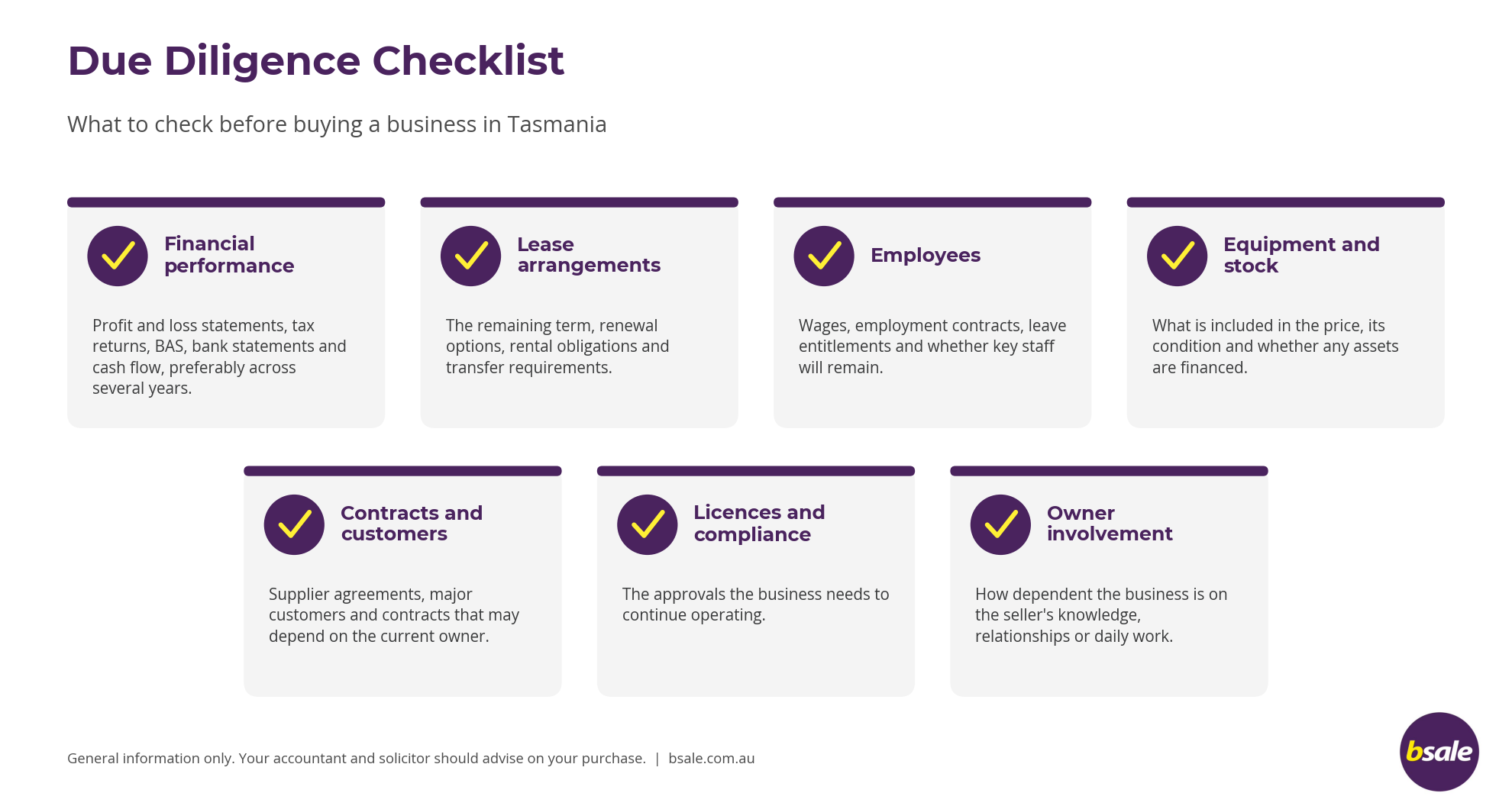
Due diligence involves independently checking whether the business is performing as represented and identifying potential risks before settlement.
Important areas include
- Financial performance – Review profit and loss statements, tax returns, BAS, bank statements and cash flow, preferably across several years.
- Seasonal income – Examine monthly sales, profitability and working capital requirements, particularly for tourism and hospitality businesses.
- Lease arrangements – Confirm the remaining term, rental obligations, renewal options and transfer requirements.
- Employees – Check wages, employment contracts, leave entitlements and whether key staff will remain.
- Equipment and stock – Verify what is included in the price, its condition and whether any assets are financed.
- Contracts and customers – Review supplier agreements, major customers, booking arrangements and contracts that may depend on the current owner.
- Licences and compliance – Confirm the business has the approvals required to continue operating.
- Owner involvement – Understand how dependent the business is on the seller's knowledge, relationships or daily work.
Buyers relocating from interstate should also assess local labour availability, freight costs, supplier access and the practical requirements of operating in regional Tasmania.
For assistance, read The 5 Experts Every Business Buyer Needs on Their Team.
Buying a Lifestyle or Tourism Business in Tasmania
Tasmania's tourism, hospitality and accommodation sectors attract buyers looking for both an income and a change of lifestyle. However, a business that looks appealing during the busy summer months can operate very differently throughout the rest of the year.
Understand the Business You Want to Buy
Kevin Connolly, a Director at CRE Brokers who holds licences in Tasmania and several mainland states, says hospitality buyers often have a clear preference for the type of business they want.
“There are buyers who like accommodation, other buyers who like licensed venues and others who want cafe/food-service businesses. But generally, you could say that most buyers are entrepreneurs who want to improve the business and put their stamp on it,” he said.
Before buying, consider whether your experience and preferred lifestyle suit the operating requirements of the business.
Review Seasonal Trading Performance
Tourism businesses can experience substantial changes in revenue throughout the year.
A motel, cafe or tour business may generate strong summer revenue but face lower occupancy, fewer customers and reduced cash flow during quieter months. Buyers should review monthly financial results across at least two years, including staffing costs, occupancy rates, operating expenses and working capital requirements. For accommodation businesses, check the sources of bookings, cancellation rates, commission costs and reliance on third-party booking platforms.
Consider the Reality of Owner Involvement
Buying a tourism business can be an opportunity to relocate or change careers, but the lifestyle may be different from what buyers expect.
Peak tourist periods can involve long working hours, weekends and public holidays. In smaller towns, finding suitable employees and replacement managers may also be challenging. Nationally, businesses advertised as under management received approximately 30% more enquiries than the average listing on Bsale during the September 2026 quarter.
If buying an under-management business, confirm whether the management structure, staffing and systems can continue without the current owner.
For tourism operators using national parks or protected areas, check with the Tasmania Parks and Wildlife Service about licences, approvals and operating conditions.
Frequently Asked Questions About Buying a Business in Tasmania
Is Tasmania an Affordable Place to Buy a Business?
Tasmania recorded the lowest average asking price of any Australian state or territory on Bsale in the September 2026 quarter, at $532,624. However, prices vary by industry, region, business size and what is included in the purchase.
Do You Pay Stamp Duty When Buying a Business in Tasmania?
Duty generally does not apply to goodwill and other non-real business assets. However, it may apply when the transaction includes land, commercial leases or certain associated goods. Buyers should confirm their obligations with the State Revenue Office Tasmania.
Do You Need a Broker to Buy a Business in Tasmania?
No. Buyers can purchase directly from an owner or through a business broker. Registering with brokers in Hobart, Launceston and regional Tasmania can help buyers find opportunities in a smaller market.
What Should I Check Before Buying a Tourism Business?
Review seasonal income, occupancy or customer numbers, staffing, cash flow, licences and the level of owner involvement. Buyers should also check whether existing bookings and operating approvals can be transferred.
How Long Does It Take to Buy a Business?
The timeframe depends on finance, due diligence, lease assignments, licensing and contract negotiations. Nationally, the median time between a business being listed and marked as sold on Bsale was 202 days, although this measures listing activity rather than the buyer's transaction timeframe.
Find Businesses for Sale in Tasmania
Bsale has connected business buyers and sellers across Australia since 2000, with listings advertised by business brokers and private sellers.
View businesses for sale in Tasmania, including Hobart and Launceston & Northern Tasmania.
Buyers can also find an adviser through Bsale's business broker directory.
Disclaimer – Bsale marketplace statistics reflect activity on Bsale.com.au and do not represent all Australian business sales. Listing details, asking prices and sold statuses are supplied by advertisers and are not independently verified. Asking prices may be advertised as walk-in walk-out (WIWO), plus stock at valuation (SAV), or include freehold property. Asking prices are not confirmed sale prices. Figures are indicative only. This article provides general information and is not legal, financial or investment advice. Buyers should obtain independent professional advice and complete due diligence before purchasing a business.
About the author

Vanessa Lovie-Yousaf
CEO Bsale Australia
Vanessa Lovie-Yousaf is the CEO and manager of Bsale.com.au, one of Australia’s most trusted business for sale marketplaces since 2000. With 15 ...


