Inside Zircom’s Team-Based Approach to High-Value Business Sales
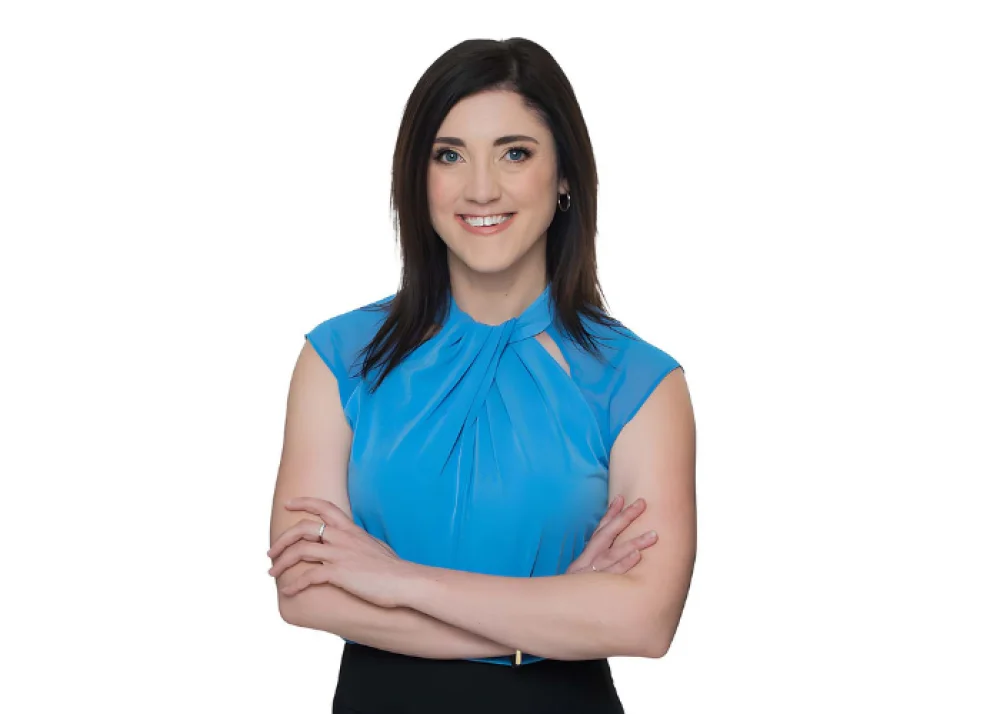
Inside Zircom’s Team-Based Approach to High-Value Business Sales
When Catherine Screaigh reflects on her path into business broking over 10 years ago, it’s not a story of a carefully mapped-out career. Instead, it’s one shaped by timing and a willingness to apply hard-earned skills in a new way.
Today, she is part of the tight-knit team behind Zircom Business Brokers in Perth. The team includes her father, sister, and mother, all working together on complex, high-value transactions across Western Australia.
It’s an unusual structure in an industry where individual brokers are the norm. But for the Screaigh family, collaboration is central to how they deliver results and why they’ve sustained a successful brokerage for more than 30 years.
Rather than operating as individual brokers with separate listings, the team collaborates across every engagement. Each member brings different strengths, enabling them to manage transactions that often involve multiple disciplines and stakeholders.
“In many ways, we run our practice like an accountancy practice,” David explained. A Collaborative Family Model Zircom Business Brokers focuses on selling larger private businesses to strategic buyers. As both Catherine and David are Chartered Accountants, the firm also developed a specialist division for accounting practice sales to capitalise on their experience and expertise.
However, what makes the business distinct is its structure. “We’re a family business,” Catherine explained. “And we genuinely work together as a team.”
Catherine works alongside her father, David Screaigh, who has over 25 years’ experience as a broker, her sister, Michelle Barrington, and their mother, Leanne.
Like many in the industry, neither Catherine nor David initially set out to become business brokers. Both began their careers as Chartered Accountants, building technical expertise before transitioning into advisory roles.
“Business broking is a great way to use the skills that we developed as accountants and just apply them in a different way,” Catherine said.
David’s entry into business broking was even less deliberate. “I just met someone who was doing it and thought, ‘that’s a pretty good idea,’ and then it just went on from there,” he recalled. “I didn’t specifically say ‘I’m going to be a business broker.’ It just sort of happened.”
Michelle’s journey was very unusual. As an international performer who had worked across Europe and on cruise ships, she returned to Australia prior to COVID and joined the family business. Since then, she has retrained as a business valuer, adding another layer of capability to the team, alongside her strong understanding of the research and processes involved in marketing client businesses.
And the glue that holds the team together is Leanne. A Certified Practicing Accountant with small business ownership experience. She is responsible for the administration and financial management of the business and supporting overall operations where needed.
“We all fell into it in different ways, but we draw on our collective experience and life skills to guide what we do,” David concluded. Complex Deals, Long Timelines
The nature of the brokerage’s work means that transactions are rarely straightforward. One recent deal was a large civil works business sold to an overseas buyer with an Australian presence. This deal took around 12 months to complete.
The process involved internal and external accountants and lawyers on both sides, and extensive back-and-forth negotiations. “There were a lot of moving parts,” David remarked. “But in the end, we got it settled.”
For the team, every completed transaction represents a significant achievement. As Catherine put it, “Selling a business is a complex process with many moving parts, but when everything comes together, it’s incredibly rewarding.”
The Human Side of Transactions
Beyond the technical complexity, business broking is deeply human work. For many, selling a business is a once-in-a-lifetime event, often tied to decades of effort and personal identity.
“We often say to our clients, ‘it’s a bit of a rollercoaster ride’,” Catherine shared.
The process can involve uncertainty and shifting expectations, all of which are caused by factors outside anyone’s control. Sellers, in particular, are navigating both financial and emotional decisions. Sellers and buyers are moving into different futures.
“For most sellers, it’s their first time going through the process, so having someone there to guide them and talk things through along the way makes a real difference,” Catherine commented.
This is where the broker’s role extends beyond valuation and negotiation. Guiding clients through the highs and lows, managing expectations, and keeping transactions on track requires clear communication.
Each deal brings its own quirks, even in the same industry. “No sale is the same,” Catherine commented, emphasizing the need for adaptability at every stage.
Market Conditions in WA
From a market perspective, the team sees the Western Australian market as relatively strong and resilient, supported by the resources sector and the flow-on benefits across many industries.
“We are finding there is really strong demand from buyers for established businesses that have consistent profits and strong management teams,” observed Catherine.
Interest is coming from local and interstate buyers, many viewing WA as an attractive acquisition market. At the same time, a wave of long-term business owners who have built strong businesses over 20 to 30 years are considering succession and retirement.
This combination is creating a steady pipeline of quality businesses entering the market.
However, challenges remain. Michelle pointed to labour constraints and rising wages as ongoing issues. “Most businesses say, ‘we would expand if we had more labour’,” she noted.
There is also some caution around spending as interest rates rise, although established buyers, particularly those already operating businesses, are still active and often better positioned to secure suitable funding.
AI as a Supporting Tool
Like many professional service firms, Zircom is exploring how artificial intelligence can enhance its operations. The team sees clear efficiency gains, particularly in drafting and brainstorming.
“It does create efficiencies in the workplace,” observed Michelle. “It’s a useful tool for shaping and refining content and generating ideas.”
However, she is equally clear about its limitations. “It doesn’t replace our experience or our judgement,” Michelle added.
David echoed this view, noting that while parts of the process can be supported by AI, the full transaction cannot be automated. “You can’t just plug AI into the process and have it do the deal - these transactions still involve people, emotions, and relationships,” he said.
Instead, the technology is being used as a complementary tool. The Zircom team also observed that, increasingly, buyers are considering how AI can improve the businesses they are buying.
The Future of the Industry
Despite the challenges, the Zircom team sees a strong future for business broking. An aging cohort of business owners, many without successors, is expected to keep supply flowing, while demand remains steady from strategic and willing buyers.
“We are finding the market remains very active," Catherine said.
She also believes the profession is becoming more structured and professional, supported by industry bodies such as AIBB and improved technology.
For David, however, the barriers to entry remain high. “It’s the most difficult thing I’ve ever done,” he added, reflecting on a career that has included running large businesses and working with public companies.
Breaking into the industry without mentorship can be particularly challenging. In that sense, the family model has provided Catherine and Michelle with what David describes as a “turbocharged” start.
A Career That Evolves
For Catherine, the appeal of business broking lies in its variety and the challenge it presents. No two days (or deals) are the same, requiring constant adaptation and problem-solving.
“It’s not an easy career, but it’s a very rewarding one,” she said.
Unlike her earlier work in accounting, this role offers a dynamic environment where each transaction brings new industries, clients, and complexities.
Looking ahead, she has no plans to step away. “I expect to be doing this in 20 years’ time,” she added.
In a business built on family, it’s a fitting outlook, suggesting the next generation may yet find its way into the fold, continuing a model that has already proven to be resilient and effective.
Tags: business broker tips selling feature
About the author