Olivia’s Move from Buyer to Business Broker is Helping Hospitality Owners
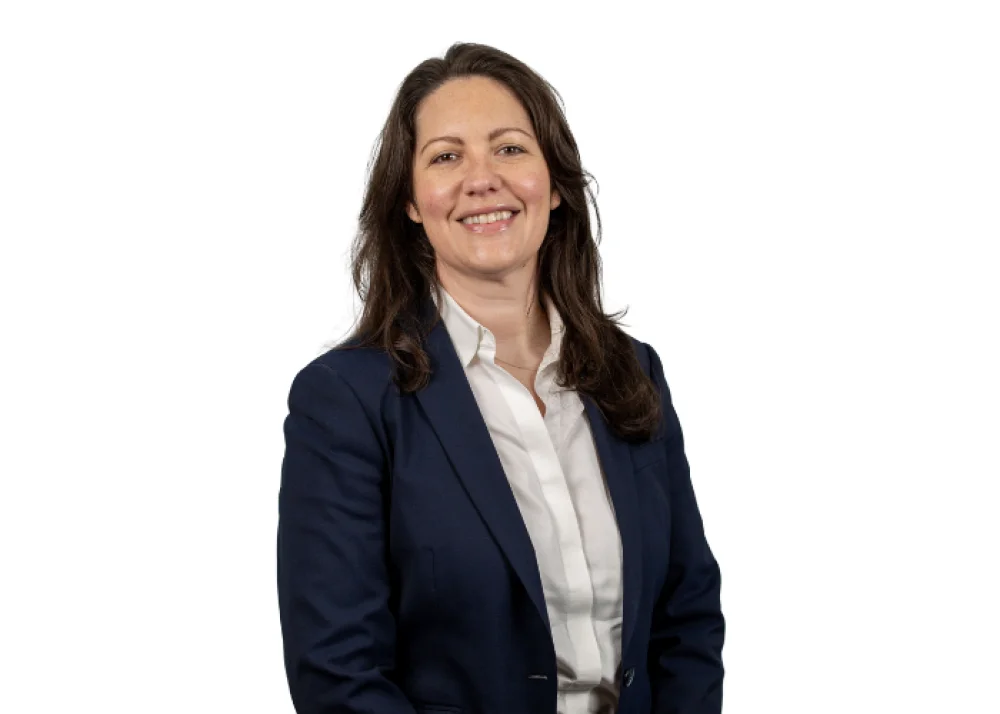
Olivia’s Move from Buyer to Business Broker is Helping Hospitality Owners
Following a long career in hospitality management and consulting in the UK, Olivia Casson decided it was time for a change. Having spent a few years in Australia in her 20s, she returned permanently in 2018, looking for a new direction.
“The culture here has changed, and I’d like to say the weather is better, but I think the Australian Tourism Board oversold that, here in Sydney anyway, “ she commented. “But this is definitely home now.”
Work proved harder to find than expected. Her roles lacked the scale and challenge she was used to. Looking for another reset, she left her job and considered running her own venue after spotting a large restaurant for lease near her new home.
A frustrating search for the right opportunity eventually led her to a meeting with a business broker who suggested an entirely different path.
Life as a Business Broker
Olivia recalled, “At our third meeting, he asked, ‘Have you thought about being a business broker? We specialise in hospitality, providing consulting and exit planning services. You have skills that would really help our clients’.”
“I walked away from that meeting thinking, ‘What a ridiculous idea. He’s meant to be helping me find a business to buy’,” she said. “But I thought about it and realised it offered many positives. I’d be helping hospitality businesses, I’d be able to use my consulting experience, and I’d be working with business owners at the grass-roots level, not a corporate board.”
And so, with a relatively small pivot, Olivia joined the Sydney team at GSE Hospitality Brokers.
“Now I'm working with a lot of independents, both large and small, that have some great products and businesses, but they don't always know how to position those to recover the value in those businesses,” Olivia pointed out.
“You can watch any number of kitchen shows on TV, but when you know the hospitality industry intimately, it’s a different world. I speak the same language, I've walked in their shoes so I can genuinely understand and help them.”
Hospitality Business Sales
Olivia freely admits that sales of hospitality businesses are the only business sales she knows, so she doesn’t attempt to compare hospitality businesses with any business outside her specialty.
“I work with many cafes, GSE does sell many of them, and they sell quite quickly,” Olivia continued.
“I think that’s because there’s always a strong demand for them. They are seen as a good starting point for anyone wanting a start in the industry, they are much simpler to operate than a restaurant, and you can still buy a good one for under $100,000. Plus, there are so many of them, there is always plenty coming onto the market.”
Olivia agreed that more complex hospitality businesses don’t sell as quickly, but she is seeing a change in the types of buyers looking for those businesses.
“With falling interest rates and reducing property returns, I am seeing more investors looking for these businesses, particularly if the business operates under management,” she observed. “A well-run hospitality business can return 20 to 30 percent of the bottom line, so that is attractive for investors.”
Valuation drivers
Olivia regards the lease as a fundamental driver of value. “The lease can make or break business value and how quickly people buy. If the lease is unsuitable, you can't sell the business at any price - unless you lack integrity and take advantage of people who don't know any better, “ she stated.
Olivia has found that often landlords will extend terms or negotiate if it suits them, but they rarely reduce the rent.
“And then you've got to look at the profit and loss,” continued Olivia.
She explained that after conducting the usual profitability analysis, she uses her knowledge of hospitality businesses to quickly identify actions the owners can take to dramatically improve profits and, therefore, valuation.
“For example, late last year, two young men had a bakery cafe, an incredibly successful top line. Beautifully presented, great social following. But barely breaking even. On the numbers, maybe a $350,000 valuation,” recalled Olivia.
I worked with them every fortnight for three months. We reorganised the roster, replaced the chef, and made productivity improvements. Six months later, the business was making $50-60k profit monthly and was sold for $1,000,000. My detailed knowledge is a big advantage for clients.”
Women in Business Broking
At GSE, Sydney office, Olivia is the only woman, but she doesn’t regard that as good or bad.
“Remember, I worked in Michelin-star kitchens, which is a very aggressive, male-dominated and sometimes odd environment, so this doesn’t faze me. Now I work in an environment where they’re aware it’s 2025,” Olivia commented. “Over the last 18 months, the GSE organisation has added two more women in other offices, which has been a significant change.”
“There are opportunities for everyone, irrespective of gender, and it’s proof that business broking is evolving. I think this is a great career for women. It taps into many of the skills that come naturally to us. Because there’s often a lot going on, the broker needs to keep everything moving forward,” Olivia suggested.
“And being a chatterbox like me helps too,” Olivia shared.
Apart from skills, Olivia sees many advantages to a business broking career for women.
“It’s relatively flexible, so you can allow for family and other responsibilities, and you control how hard you work, knowing that your rewards will largely match your effort. Also, coming from hospitality, I value having no weekend or evening work, unless I want to” Olivia concluded.
Tags: business broker tips selling feature
About the author