Dustin Slypen Built a Reputation by Solving the Hard Deals
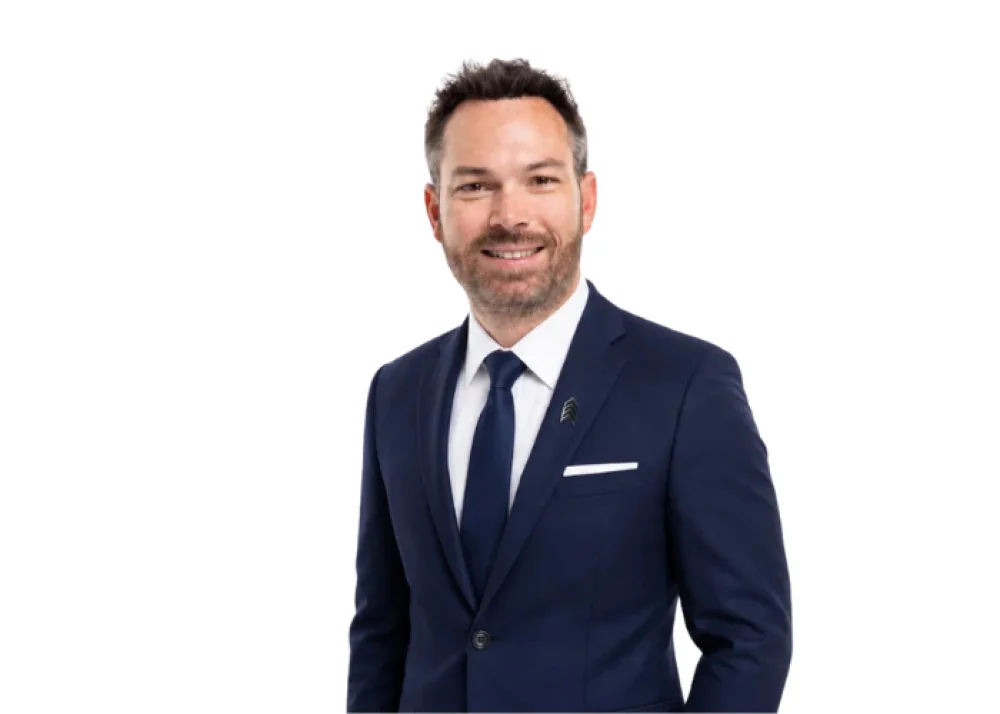
Dustin Slypen Built a Reputation by Solving the Hard Deals
A national industry award can be a career-defining moment, but for Brisbane-based business broker Dustin Slypen, it was also a reminder of how far he had come.
As a 3 time REIQ Broker of the year winner, he was encouraged to put himself forward for the national REIA award when Queensland rejoined the organisation again 2026. To his surprise, he took out the honour, supported by a body of work that included some of the most complex transactions of his career.
Those deals, he explained, were not simply about closing sales. They involved navigating difficult negotiations, solving structural problems, and helping clients through situations that often extended well beyond traditional brokerage work.
From Classroom to Brokerage
“If you asked me 15 years ago what a business broker did, I would not have been able to tell you,” Dustin commented. At the time, he was a schoolteacher looking for a different challenge.
The turning point came through a friend who specialised in dental practice sales on theSunshine Coast. “I was teaching and coaching his kids,” Dustin continued. “He just said,
‘Why don’t you give this a crack with me?’, so I decided to give broking a try.”
After about a year in specialist broking, he crossed paths with the directors of LINK Brisbane. They encouraged him to broaden his scope beyond dental practices and enter the wider business sales market. The transition was gradual. In 2015, he was teaching part-time while also building a broking career.
He still remembers closing one of his earliest LINK transactions during a lunch break while working in the school sports office. “I was handing out footballs while I was trying to close the deal,” he recalled.
It took almost 12 months to complete his first transaction, and he considered giving up at times. Once he completed that first deal, however, momentum followed. “I was able to resign from teaching and do broking full-time from 2016,” he explained.
Building a Broking Career
Today has developed a reputation for handling larger, more complex transactions. He credits much of his growth to the support structure around him.
LINK’s national network spans Australia and New Zealand and includes more than 120 brokers. “They’re forever implementing tools and resources for brokers to make our jobs easier while also reaching a better outcome for buyers and sellers,” Dustin explained. He pointed to appraisal systems, buyer-sourcing capabilities, and newer AI-driven resources as examples of that investment.
At the local level, he highlighted the support provided by the Brisbane leadership team and office staff. Having access to experienced colleagues and operational support allows brokers to focus on client outcomes while navigating increasingly complex transactions.
Navigating Complex Transactions
The work that helped underpin Dustin’s award submissions often involved transactions where the challenges emerged after he had already found a buyer.
Two recent share-sale transactions involving large fitness centres stand out. Unlike asset sales, share sales require buyers and advisers to examine liabilities, work in progress, warranties, and ongoing obligations. Legal and accounting due diligence can be extensive, with negotiations lasting for long periods.
“Getting a buyer interested wasn’t the hard part,” he explained. “It was navigating through the process.”
Another memorable transaction involved a roofing business in North Queensland. The company was performing strongly and largely operated under management, but buyers repeatedly became concerned about key-person risk. If a critical manager left, they feared the business could suffer.
After several failed offers, Dustin proposed a different structure. Rather than replacing the manager, why not make them an equity participant? A buyer embraced the idea, agreeing to proceed on the condition that the general manager retain a 10–20 percent stake in the business.
Despite selling only 80% of the business, the final result achieved the seller’s target price, the manager gained a vested interest in the business he helped build, and, as Dustin related, the buyer was very pleased. “I spoke to the buyer of that business three or four months ago. The business has grown by another 15% on the previous year.” It was an example of how creative thinking can unlock value when conventional approaches stall.
Understanding Today’s Market
While broader economic conditions attract plenty of attention, Dustin remains optimistic about the business sales market.
He believes businesses continue to offer attractive returns compared with many alternative investments. At the same time, buyer behaviour has changed. Transactions are occurring more slowly, but average deal values have increased significantly.
According to Dustin, average transaction values have shifted from around $400,000 to approximately $800,000 over the past few years. The market is seeing fewer listings and fewer buyers, but both groups are of higher quality.
“We’re dealing with fewer buyers, but better quality buyers,” he said. Many are sophisticated operators, cash purchasers, or private equity investors who can move without relying heavily on bank finance.
For Dustin, the strongest activity remains in the $300,000 to $800,000 range, where owner-operators can immerse themselves in a business and create value through hands-on involvement. At the lower end, however, financing challenges have made sales increasingly difficult. Businesses valued at less than $200,000 often struggle to attract qualified buyers because securing funding is increasingly challenging.
The Human Side of Broking
Ask Dustin about the biggest challenges in the profession, and his answer extends well beyond spreadsheets and contracts.
“A good business broker is a marriage counsellor, a psychologist, a financial planner, a lawyer,” he jokingly said.
One of the most difficult situations arises when directors are in conflict. Even when a willing buyer exists and the business is attractive, disagreements between owners can threaten a transaction.
Equally problematic are businesses with poor preparation. “We know they’ve got a great business in terms of revenue and profit figures may exist, but if financial records are a mess, accountants can’t complete due diligence, and lenders are reluctant to lend,” Dustin continued.
He also believes specialist advisers matter. Transactions can become unnecessarily complicated when buyers or sellers choose advisers without experience in commercial transactions. In his view, preparation and the right professional support remain critical ingredients in successful sales.
The Pipeline of Established Businesses
Despite economic uncertainty and changing government policies, Dustin sees significant opportunity ahead.
One reason is demographics. Across Australia, many long-term business owners are approaching retirement. At the same time, their children are often pursuing different careers rather than taking over family enterprises.
That outlook reflects the philosophy that has shaped his own career.
From a teacher closing deals between classes to a nationally recognised broker handling complex transactions, Dustin has built his success on persistence, adaptability, and a belief that opportunities exist in every market. As he put it, “No matter how strong or weak a perceived market is, there are always opportunities there.”
Tags: business brokers strategy tips emagazine feature
About the author